Stymphalian Birds in Percy Jackson — Myth Origins, Powers & Scenes
The metallic-feathered terror that invades Camp Half-Blood—here's everything you need to know about these deadly creatures from Greek mythology and their appearances in the Percy Jackson series.
Quick Answer
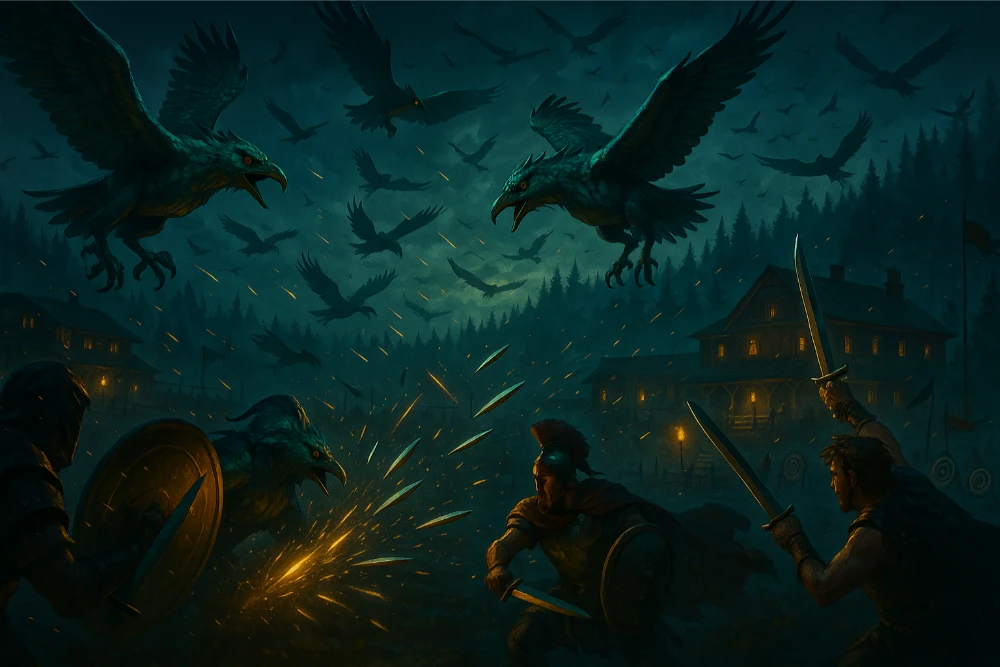
Stymphalian birds are man-eating, metallic-feathered birds from Greek myth (Heracles' 6th labor). In Percy Jackson, they appear as swarming monsters driven off by loud noise and celestial bronze weapons.
Myth Origins
The Stymphalian birds originate from Greek mythology, specifically from the sixth labor of Heracles (Hercules). These man-eating birds lived around Lake Stymphalus in Arcadia and were known for their metallic feathers and razor-sharp beaks.
Hercules' Sixth Labor
According to the myth, Heracles was tasked with clearing the Stymphalian birds from the area. The birds were so numerous and dangerous that they:
- Had metallic feathers that could be shot like arrows
- Possessed razor-sharp beaks and talons for tearing flesh
- Fed on human flesh and terrorized the local population
- Could fly in massive flocks, darkening the sky
How Hercules Defeated Them
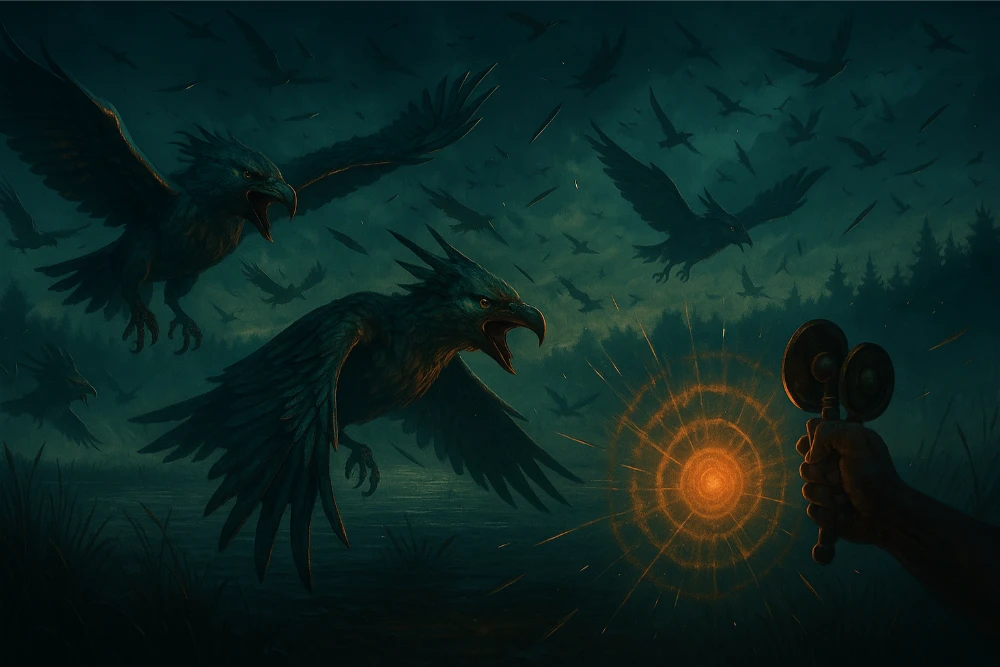
Athena gave Heracles a pair of krotala (bronze clappers or castanets) that created deafening noise. The birds were terrified by the sound and scattered, allowing Heracles to shoot them down with his arrows. This method of using loud noise to scatter the flock became their primary weakness.
In Percy Jackson
Stymphalian birds appear in multiple books and adaptations of the Percy Jackson series, always maintaining their core characteristics from Greek mythology while adapting to the modern setting. These creatures are often featured in Percy Jackson experiences and interactive claiming ceremonies.
Appearance Timeline
| Book/Media | Chapter/Scene | Context | Key Characters | Defeat Method |
|---|---|---|---|---|
| The Sea of Monsters | Chariot Race | Attack Camp Half-Blood during the race | Percy, Annabeth, Tyson | Loud music from Chiron's boom box |
| The Mark of Athena | Argo II Attack | Swarm the ship during flight | Percy, Jason, Piper | Celestial bronze weapons and teamwork |
| Sea of Monsters (Movie) | Forest Attack | Attack the trio in the forest | Percy, Annabeth, Grover | Loud noise and celestial bronze |
Notable Scenes
In The Sea of Monsters, the birds attack during the chariot race, creating chaos as they dive-bomb the competitors. Chiron uses a boom box to create loud music that scatters the flock, allowing the demigods to fight back effectively.
The Mark of Athena scene shows the birds as a more organized threat, swarming the Argo II in coordinated attacks that require teamwork and strategy to overcome. These encounters are often recreated in Percy Jackson claiming experiences where fans can experience similar challenges.
Powers & Weaknesses
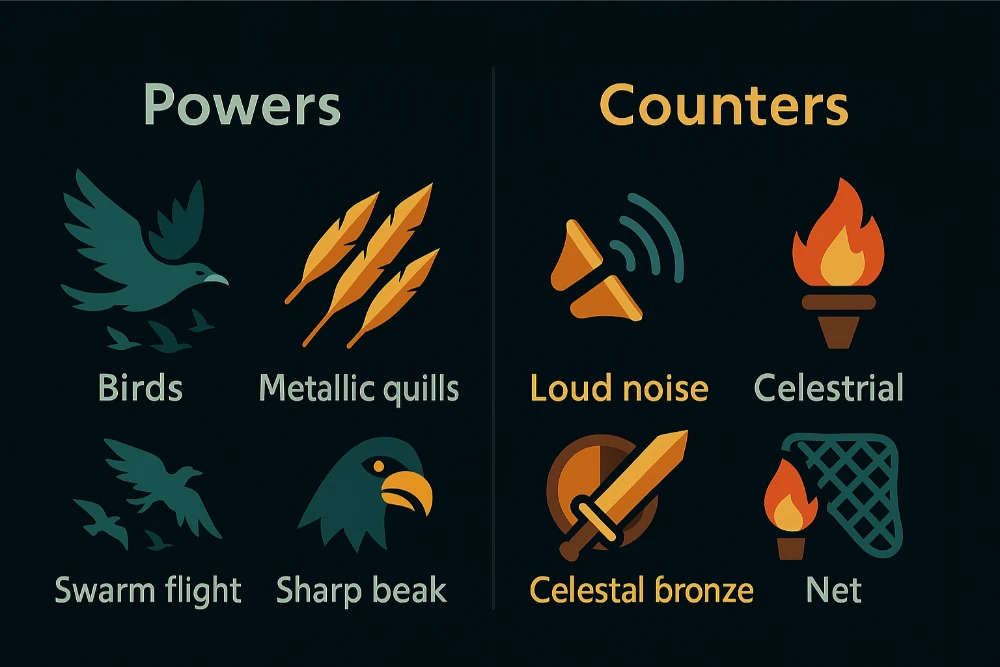
⚡ Powers
- Metallic Feather Projectiles: Can shoot their feathers like arrows
- Razor-Sharp Talons: Capable of tearing through flesh and armor
- Swarm Tactics: Attack in coordinated flocks
- Flight: Agile aerial combat abilities
- Intimidation: Darken the sky with their numbers
🛡️ Weaknesses
- Loud Noise: Terrified by deafening sounds
- Celestial Bronze: Vulnerable to divine weapons
- Fire: Effective for crowd control
- Nets: Can be trapped and contained
- Disorganization: Scatter when frightened
Comparison with Other Bird Monsters
Unlike Harpies (who are more individual and serve specific purposes) or Sirens (who use enchantment), Stymphalian birds are purely destructive swarm creatures that rely on overwhelming numbers and physical attacks. As shown in the image above, Stymphalian birds with metallic feathers are effectively countered by loud noise that scatters the flock.
Pronunciation
How to Pronounce "Stymphalian"
Emphasis on the second syllable: stim-FAY-lee-ən
Study Pack
Learn more about Percy Jackson monsters and claiming experiences in our comprehensive guides.
Vocabulary Cards
Quick Quiz
1. What is the primary weakness of Stymphalian birds?
2. Which Greek hero defeated the Stymphalian birds?
3. In which Percy Jackson book do the birds attack Camp Half-Blood?
Take the Full Monster Quiz
Learn about Claiming Experiences →
Frequently Asked Questions
Stymphalian birds are man-eating birds with metallic feathers from Greek mythology, featured in Hercules' sixth labor where he had to clear them from Lake Stymphalus using loud noise and celestial bronze weapons.
Stymphalian birds appear in The Sea of Monsters during the chariot race, attacking Camp Half-Blood, and in The Mark of Athena when they attack the Argo II. They are vulnerable to loud noise and celestial bronze weapons.
Stymphalian birds are vulnerable to loud noise that scatters the flock and to celestial bronze weapons. Fire and nets are also effective for crowd control. In Percy Jackson, characters use music and celestial bronze to defeat them.
No, Stymphalian birds are different from Harpies. Harpies are individual creatures that serve specific purposes (like carrying away souls), while Stymphalian birds are destructive swarm creatures that attack in flocks and are purely aggressive.
Stymphalian is pronounced /stim-FAY-lee-ən/ with emphasis on the second syllable. It comes from Lake Stymphalus in ancient Greece.
Yes! Stymphalian birds often appear in Percy Jackson claiming experiences and interactive events, where fans can encounter these creatures as part of their claiming ceremony journey.