
Magic
Spellwork, occult knowledge, mystical force, and the shaping of reality through hidden means.
Minor Goddess · Magic, Crossroads, and Hidden Knowledge
Hecate is the Greek goddess of magic, witchcraft, crossroads, torches, and hidden knowledge. In Greek mythology, she represents liminal power: the knowledge, fear, and possibility that gather where paths divide and ordinary certainty begins to break down.
In the Percy Jackson world, Hecate is linked to Cabin 20 at Camp Half-Blood and to one of the most atmospheric later-cabin identities in the series. This page connects Hecate's mythology, symbols, powers, Percy Jackson role, and Cabin 20 identity in one clear guide.
Quick Answer
Hecate is the Greek goddess of magic, crossroads, and hidden knowledge.
She is one of the most distinctive non-Olympian divine figures in Greek mythology.
In Percy Jackson, she is linked to Cabin 20 and to magic-centered identity at Camp Half-Blood.
Hecate is the Greek goddess most strongly associated with magic, witchcraft, crossroads, torches, ghosts, and hidden knowledge. She is a major figure in the wider Greek myth world and one of the clearest symbols of liminal, mysterious power.
In Percy Jackson, Hecate is linked to Cabin 20 at Camp Half-Blood. She is associated with spells, mist, intuition, layered thinking, and the kind of power that works through thresholds, secrecy, and knowledge rather than direct force.
Jump to section
Overview
Hecate is one of the most mysterious divine figures in Greek mythology, associated with magic, witchcraft, night, crossroads, ghosts, torches, and the hidden knowledge that lives at thresholds. She represents power that is hard to categorize and harder to control.
What makes Hecate so distinctive is that she governs liminal spaces: the places where one state becomes another, where certainty gives way to possibility, and where knowledge can become dangerous. Her symbolism is deeply tied to keys, paths, doors, and the unsettling intelligence of knowing more than others can see.
In Percy Jackson, that same identity carries directly into Cabin 20. Hecate becomes more than a mythic witchcraft goddess. She becomes a full Camp Half-Blood identity built around intuition, spells, secrecy, layered thought, and power that works from the edges inward.
Divine Domains
Hecate governs power at thresholds: magic, hidden knowledge, and the unstable spaces where paths split and reality becomes less certain.
Spellwork, occult knowledge, mystical force, and the shaping of reality through hidden means.
Choice points, divided paths, threshold spaces, and moments of transition.
Light carried through darkness, especially when knowledge must guide through fear or uncertainty.
Concealment, illusion, altered perception, and the unstable boundary between what is seen and what is true.
A presence near the dead, the unseen, and the edge between ordinary and uncanny worlds.
Intuition, esoteric understanding, layered thinking, and dangerous insight.
Powers and Abilities
Hecate's power is mysterious, ritual, and knowledge-driven. She is not mainly a force of public command. She rules through hidden understanding, spellwork, and the ability to navigate unstable spaces.
Hecate is strongly associated with magic, rituals, enchantment, and controlled mystical power.
She is linked to veiling, altered perception, and the unstable line between reality and appearance.
Hecate governs crossroads and liminal spaces, where transformation and danger often gather together.
She represents hidden knowledge, intuition, and the ability to understand what others overlook.
Her torches symbolize guidance through darkness, especially in situations shaped by fear, secrecy, or uncertainty.
Greek Myth vs Percy Jackson
Percy Jackson
In Percy Jackson, Hecate matters because she gives Camp Half-Blood a distinctly magical and liminal identity beyond the main Olympian cabins. She expands the world from strategy, combat, prophecy, and sea power into the stranger territory of spells, mist, and hidden knowledge.
That matters especially for readers who do not identify with the brighter or more public forms of strength in the series. Hecate offers a path built around secrecy, layered thought, intuition, and power that does not announce itself immediately.
For readers, Hecate becomes meaningful through Cabin 20 and through the broader idea that some of the strongest identities at camp are not the loudest. They are the ones that watch, understand, and change the shape of reality from the margins.
Camp Half-Blood
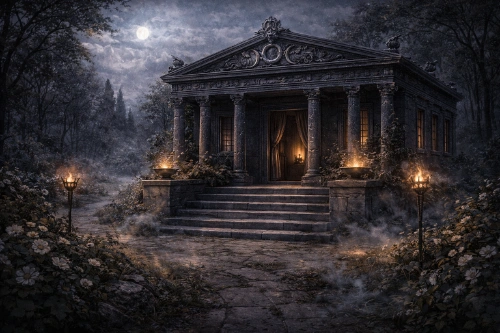
Cabin 20 is one of the most atmospheric later cabins at Camp Half-Blood because it has such a clear magical identity. Hecate's children are associated with spells, hidden knowledge, mist manipulation, intuition, ritual thinking, and the sense that power can be subtle without being weak.
For readers, Cabin 20 often appeals to people who connect with mystery, magic, layered perception, and the ability to stay calm around what unsettles others. It is one of the strongest comparison cabins when users are deciding between Hecate, Hades, Hypnos, and Athena-like intelligence profiles.
Family
Notable Children and Related Figures
The clearest Hecate-line camp anchor, representing magic, secrecy, and the strange intelligence of Cabin 20.
A Hecate-associated demigod in the wider Riordan world who reinforces the cabin's magical and unstable identity.
A powerful magic-linked figure often associated with Hecate's wider mythic domain of witchcraft and dangerous knowledge.
Though distinct from Hecate, Circe is a strong adjacent figure in Greek myth's magical tradition and helps frame Hecate's sphere of influence.
Mythology
Hecate's torch-bearing role in the Persephone myth reinforces her identity as a guide through darkness and hidden paths.
Her repeated association with crossroads defines her as a goddess of transition, uncertainty, and threshold power.
Later mythic and literary traditions strongly connect Hecate to spells, rituals, ghosts, and occult knowledge.
Her imagery often includes movement through darkness with torches and hounds, emphasizing unease and hidden perception.
The symbolic link between Hecate and keys reflects her authority over hidden access, doors, and forbidden or protected knowledge.
Personality Match
Hecate-identified readers usually connect with intuition, mystery, layered thinking, secrecy, and the feeling of standing near hidden knowledge. This profile often appeals to people who are more comfortable in complexity than in straightforward visibility.
Compared with brighter or more public godly-parent identities, Hecate feels quieter, stranger, and more inwardly charged. Her energy is often tied to perception, symbolic awareness, and the ability to operate effectively in uncertain situations.
This profile frequently appeals to readers who want power to feel magical, subtle, intelligent, and a little unsettling.
Hecate vs Apollo: Hecate is darker, more occult, and more threshold-based, while Apollo is brighter, more public, and more clearly aligned with healing and prophecy.
Hecate vs Athena: Hecate is more mystical, intuitive, and symbolic, while Athena is more structured, rational, and civic in her intelligence.
Hecate vs Hades: Hecate is more magical and liminal, while Hades is heavier, more final, and more centered on the Underworld itself.
Appearances
Hecate is not a central presence yet, but the wider magical logic of the world already points toward identities like hers.
Her direct role remains limited, though later-cabin and mythic expansion make her kind of power increasingly imaginable.
The darker and more liminal side of the myth world continues to widen, creating clearer space for Hecate's identity.
As magic, mist, and strange thresholds become more visible in the series, Hecate's domain feels especially relevant.
Hecate's direct presence remains more symbolic than central, but her cabin identity and magical sphere strongly fit the larger Camp Half-Blood world.
Why Hecate Matters
Hecate matters in Greek mythology because she represents one of the clearest forms of liminal power: magic, thresholds, hidden knowledge, and the intelligence needed to move through uncertainty.
In Percy Jackson, Hecate matters as a later-cabin archetype, Cabin 20 identity anchor, and one of the strongest bridges between Greek magical tradition and fan self-identification through Camp Half-Blood.
Discover your godly parent
If you connect with intuition, mystery, magic, hidden knowledge, and quiet power that works through perception, Hecate may be one of your strongest Camp Half-Blood matches.
Hecate Cabin 20 Guide
Explore Hecate in Greek mythology and Percy Jackson. Learn her powers, symbols, key myths, Cabin 20 role, and why she defines magic-centered demigod identity.
Read Guide
Minor Gods at Camp Half-Blood
Explore Hecate in Greek mythology and Percy Jackson. Learn her powers, symbols, key myths, Cabin 20 role, and why she defines magic-centered demigod identity.
Read Guide
Percy Jackson Cabin Quiz
Explore Hecate in Greek mythology and Percy Jackson. Learn her powers, symbols, key myths, Cabin 20 role, and why she defines magic-centered demigod identity.
Read Guide
Camp Half-Blood Cabins
Explore Hecate in Greek mythology and Percy Jackson. Learn her powers, symbols, key myths, Cabin 20 role, and why she defines magic-centered demigod identity.
Read Guide


