
Wine
Intoxication, celebration, altered mood, and the symbolic force of letting control loosen.
Olympian God · Wine, Ecstasy, and Divine Madness
Dionysus is the Greek god of wine, ecstasy, theater, celebration, transformation, and divine madness. In Greek mythology, he represents intensity without rigid control: emotion, release, altered states, performance, and the strange power that appears when ordinary order breaks apart.
In the Percy Jackson world, Dionysus is the godly parent behind Cabin 12 at Camp Half-Blood and the god better known around camp as Mr. D. This page connects Dionysus's mythology, symbols, powers, Percy Jackson role, and Cabin 12 identity in one clear guide.
Quick Answer
Dionysus is the Greek god of wine, theater, ecstasy, and altered states.
He is one of the twelve Olympians and one of the strangest and most unpredictable gods in Greek mythology.
In Percy Jackson, he is linked to Cabin 12 and appears at camp as Mr. D.
Dionysus is the Greek god of wine, ecstasy, theater, altered states, and emotional release. He is one of the twelve Olympians and one of the most unconventional divine figures in Greek mythology.
In Percy Jackson, Dionysus is the godly parent linked to Cabin 12 at Camp Half-Blood and the camp director known as Mr. D. He is associated with intensity, unpredictability, celebration, mood, and power that slips outside ordinary control.
Jump to section
Overview
Dionysus is one of the twelve Olympians and one of the most unusual gods in Greek mythology because he governs the parts of life that refuse neat control. He is the god of wine, theater, ecstasy, transformation, emotional release, and the kind of sacred chaos that overturns social order.
What makes Dionysus especially distinctive is that he represents both pleasure and danger. His myths are not just about celebration. They are also about madness, excess, altered identity, and the consequences of trying to resist or deny forces that are bigger than ordinary reason. Dionysus can liberate, but he can also destabilize.
In Percy Jackson, that same identity carries directly into Cabin 12 and into Mr. D's strange presence at Camp Half-Blood. Dionysus becomes more than a mythological god of wine. He becomes a full Camp Half-Blood identity built around intensity, unpredictability, theatrical energy, emotional force, and a refusal to fit cleanly into ordinary expectations.
Divine Domains
Dionysus governs experiences that loosen structure, heighten feeling, and transform ordinary states into something more intense, ecstatic, or unstable.
Intoxication, celebration, altered mood, and the symbolic force of letting control loosen.
Rapture, emotional intensity, release, and states that break beyond ordinary restraint.
Performance, masks, dramatic identity, emotional truth, and transformation through art.
Sacred frenzy, instability, psychological intensity, and the dangerous edge of divine excess.
Festivity, revelry, pleasure, and the breakdown of rigid social control.
Change of state, altered identity, and the strange border between order and wild release.
Powers and Abilities
Dionysus's power is emotional, destabilizing, and transformative. He does not rule by law or strategy. He changes people by shifting their state of mind, mood, control, and identity.
Dionysus governs emotional release, heightened states, and the force that drives people beyond ordinary restraint.
He is closely associated with divine madness, instability, and the dangerous edge of ecstatic power.
Dionysus is tied to grapes, ivy, wine, and the symbolic transformation of nature into intoxication and ritual.
He represents masks, performance, and the ability to shift how identity is experienced or expressed.
Dionysus embodies power that feels erratic, ironic, emotionally charged, and difficult to control once released.
Greek Myth vs Percy Jackson
Percy Jackson
In Percy Jackson, Dionysus stands out because he is not just a distant Olympian. He is physically present at Camp Half-Blood as Mr. D, which gives him a very different role from gods who mostly influence the story from Olympus. His sarcasm, impatience, and unpredictable authority make him one of the most memorable divine presences in the series.
That presence works because it keeps Dionysus strange. He is not simply comic relief, and he is not simply a serious authority figure. He feels bored, powerful, irritated, emotionally detached, and occasionally more dangerous than he first appears. That mix fits a god of altered states and unstable boundaries very well.
For readers, Dionysus becomes especially meaningful because he broadens the emotional texture of Camp Half-Blood. He represents one of the clearest examples of power that is moody, theatrical, contradictory, and impossible to reduce to a single clean personality type.
Camp Half-Blood
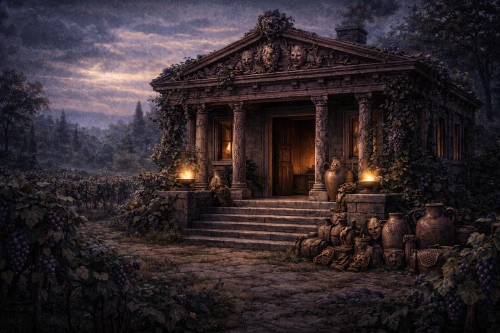
Cabin 12 is one of the most unusual cabins at Camp Half-Blood because its identity is built around intensity, celebration, mood, and unpredictability rather than clean hero archetypes. Dionysus's children are associated with emotional force, theatrical energy, strong reactions, and a style of power that does not always move in straight lines.
For readers, Cabin 12 often appeals to people who are drawn to emotional intensity, performance, humor, unpredictability, and the refusal to fit into overly rigid personality categories. It is one of the strongest comparison cabins when users are deciding between Dionysus, Apollo, Hermes, and Hecate-like unconventional identities.
Family
Notable Children and Related Figures
One of the most recognizable Cabin 12 campers in Percy Jackson, helping define the cabin's emotional and social identity.
A Cabin 12 camper whose presence helps reinforce Dionysus's place within the camp structure beyond Mr. D himself.
A major Dionysus-linked figure whose mythology reinforces his connection to love, transformation, and divine elevation.
One of the most important Dionysus-linked myth figures, showing the danger of denying or resisting the god's power.
Mythology
This myth is one of the clearest examples of Dionysus's dangerous side, showing what happens when his divinity and ecstatic power are denied.
The story of Ariadne highlights Dionysus's role in transformation, love, and divine renewal after abandonment or change.
Traditions around Dionysus's unusual birth help explain his identity as a god tied to instability, doubleness, and transformation.
This myth emphasizes his power to overturn human arrogance through sudden and surreal transformation.
His connection to ritual frenzy and dramatic performance defines him as a god of masks, altered states, and emotional truth pushed beyond ordinary boundaries.
Personality Match
Dionysus-identified readers usually connect with intensity, emotional openness, unpredictability, humor, performance, and the refusal to stay trapped inside rigid expectations. This profile often appeals to people who feel deeply, react strongly, and resist being flattened into something ordinary.
Compared with more structured or orderly godly-parent identities, Dionysus feels looser, stranger, and more mood-driven. His energy is often tied to contradiction: playful but dangerous, social but detached, chaotic but revealing.
This profile frequently appeals to readers who want power to feel transformative, expressive, messy, theatrical, and emotionally real.
Dionysus vs Apollo: Dionysus is messier, moodier, and more ecstatic, while Apollo feels brighter, more precise, and more controlled in his talents.
Dionysus vs Hermes: Dionysus is more emotionally intense and destabilizing, while Hermes is quicker, lighter, and more socially agile.
Dionysus vs Hades: Dionysus is outwardly theatrical and chaotic, while Hades is more inward, restrained, and shadow-centered.
Appearances
Dionysus is introduced as Mr. D, establishing him as one of the most immediately memorable divine presences at Camp Half-Blood.
His camp-director role continues to shape the atmosphere of Camp Half-Blood through sarcasm, authority, and unpredictability.
Dionysus remains part of the camp's emotional and organizational structure, reinforcing his unusual kind of Olympian presence.
His strange balance of indifference and power continues to define him as a god who is never fully harmless.
Dionysus's role as both Olympian and camp authority remains important as Camp Half-Blood faces full-scale war and loss.
Why Dionysus Matters
Dionysus matters in Greek mythology because he represents one of the least controllable forms of divine power: emotion, ecstasy, altered identity, and the breakdown of structures that pretend to be permanent. His myths show that order is never the whole story.
In Percy Jackson, Dionysus matters as a godly-parent archetype, Cabin 12 identity anchor, and one of the most vivid divine personalities in daily camp life. He turns mythic excess, theater, and contradiction into a memorable Camp Half-Blood identity with real emotional texture.
Discover your godly parent
If you connect with intensity, performance, unpredictability, humor, emotional release, and a refusal to fit cleanly into rigid roles, Dionysus may be one of your strongest Camp Half-Blood matches.
Dionysus Cabin 12 Guide
Explore Cabin 12 traits, Mr. D's influence, and what it means to belong to Dionysus at Camp Half-Blood.
Read Guide
Camp Half-Blood Cabins
Explore Dionysus in Greek mythology and Percy Jackson. Learn his powers, symbols, key myths, Cabin 12 role, and why he defines ecstatic divine identity.
Read Guide
Percy Jackson Cabin Quiz
Explore Dionysus in Greek mythology and Percy Jackson. Learn his powers, symbols, key myths, Cabin 12 role, and why he defines ecstatic divine identity.
Read Guide
12 Olympian Gods Guide
Explore Dionysus in Greek mythology and Percy Jackson. Learn his powers, symbols, key myths, Cabin 12 role, and why he defines ecstatic divine identity.
Read Guide


