
Sky
The open heavens, weather, height, and the visible realm above the world.
Olympian God · Sky, Thunder, and Kingship
Zeus is the Greek god of the sky, thunder, kingship, and divine order. In Greek mythology, he is the ruler of Mount Olympus and the central authority among the Olympian gods, associated with law, power, storm energy, and high-stakes judgment.
In the Percy Jackson world, Zeus is the godly parent behind Cabin 1 at Camp Half-Blood and one of the most politically powerful forces in the series. This page brings together Zeus's mythology, symbols, powers, Percy Jackson role, and Cabin 1 identity in one clear guide.
Quick Answer
Zeus is the Greek god of the sky, thunder, and kingship.
He rules Mount Olympus and leads the Olympian gods.
In Percy Jackson, he is linked to Cabin 1 and is the father of Thalia Grace.
Zeus is the Greek god of the sky, thunder, lightning, kingship, and divine authority. He is the ruler of the Olympian gods and one of the most powerful figures in all of Greek mythology.
In Percy Jackson, Zeus is the godly parent of Thalia Grace and the Olympian linked to Cabin 1 at Camp Half-Blood. He represents command, storm power, high expectations, and the political center of Olympus.
Jump to section
Overview
Zeus is the king of the Olympian gods and the clearest symbol of divine rule in Greek mythology. He governs the sky, thunder, lightning, justice, and the authority that holds the cosmos together. More than almost any other god, Zeus represents power on a large scale: political power, natural power, and moral power.
His rise defines the structure of the Greek myth world. After defeating Kronos and the Titans, Zeus establishes Olympian rule and becomes the central ruler of Mount Olympus. That victory makes him more than a storm god. It makes him the figure who enforces hierarchy, order, and the boundaries between gods, mortals, and fate.
In Percy Jackson, that same identity carries forward into Cabin 1 and into Zeus's role as a demanding, high-pressure Olympian presence. He is not usually written as approachable. Instead, he embodies judgment, authority, pride, and the weight of divine leadership.
Divine Domains
Zeus governs rule on the highest level: the sky above the world, the laws that organize power, and the thunderous force that reminds gods and mortals who leads Olympus.
The open heavens, weather, height, and the visible realm above the world.
Storm force, divine punishment, and sudden displays of overwhelming power.
Rule, command, hierarchy, and the right to govern.
Sacred promises, order, justice, and the consequences of breaking divine boundaries.
Protection of guest-right and the moral duties that hold society together.
The stabilizing force that keeps Olympian rule intact after the fall of the Titans.
Powers and Abilities
Zeus's power is broad, political, and elemental. He is not tied to one narrow specialty. Instead, he combines natural force with sovereign authority, which is why he sits at the top of the Olympian hierarchy.
Zeus can wield thunderbolts as the signature expression of his divine power and judgment.
He commands storms, sky pressure, thunder, wind, and the atmosphere above the world.
Zeus has the authority to command other gods, enforce rule, and intervene in major conflicts.
He is associated with justice, sacred promises, and punishing those who violate divine order.
Zeus represents power that changes outcomes immediately, whether through fear, command, or force.
Greek Myth vs Percy Jackson
Percy Jackson
In Percy Jackson, Zeus is written as one of the least casual and most politically powerful Olympians. He is the ruler of Olympus, and that status affects nearly every divine conflict in the series. Even when he is not physically present, his decisions, suspicions, and authority shape the stakes around Percy and the other demigods.
His role in The Lightning Thief is especially important because the missing master bolt threatens war between Zeus and Poseidon. That conflict gives Zeus a strong narrative function: he is not just the sky god in the background, but the center of a crisis that could destabilize the entire divine order.
Zeus also matters through Thalia Grace and Cabin 1. Through them, Percy Jackson turns Zeus from a mythological ruler into a clear Camp Half-Blood identity built around command, storm energy, pride, expectation, and elite pressure.
Camp Half-Blood
Cabin 1 is one of the most symbolically powerful cabins at Camp Half-Blood. Zeus's children are associated with authority, boldness, storm energy, and the kind of presence that naturally draws attention. Cabin 1 often feels less ordinary than other cabins because Zeus's line carries the weight of Olympian rule.
For readers, Zeus Cabin 1 usually appeals to people who associate strength with leadership, command, confidence, and pressure-tested decision-making. It is also one of the clearest contrast cabins when compared with Poseidon, Athena, Apollo, and Ares.
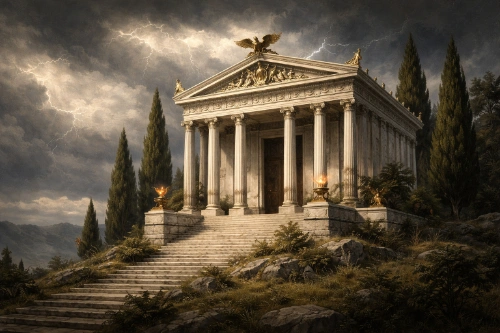
Cabin 1 reflects command, storm symbolism, and high-pressure leadership in the Camp Half-Blood system.
Family
Notable Children and Related Figures
The main Zeus-line anchor in Percy Jackson. Thalia embodies storm power, courage, pride, and leadership under pressure.
A major child of Jupiter in the Roman side of Riordan's world, often discussed alongside Zeus-line identity because of his sky and command associations.
One of the most famous mythic sons of Zeus, representing strength, fame, and the burdens of heroic greatness.
A classic Zeus-linked hero whose story reinforces Zeus's role in divine lineage and heroic destiny.
Mythology
Zeus survives the threat posed by his father Kronos and eventually leads the rebellion that ends Titan rule.
Zeus helps defeat the Titans and establishes the Olympian order, which becomes the foundation of Greek myth's divine world.
The battle with Typhon reinforces Zeus as the god who protects cosmic order against catastrophic chaos.
The story of Europa is one of the best-known myths tied to Zeus's transformations and complicated divine desire.
Zeus's conflict with Prometheus highlights his role as a ruler concerned with power, punishment, and the control of boundaries.
Personality Match
Zeus-identified readers usually value command, confidence, status, and the ability to make decisions that shape the group around them. This profile often appeals to people who see leadership as a responsibility as much as a privilege.
Compared with more inward or fluid godly-parent identities, Zeus types tend to project force outward. They are often associated with ambition, assertiveness, authority, and a strong sense of what should happen next.
This profile frequently appeals to readers who want power to look clear, visible, and high-stakes rather than hidden, emotional, or indirect.
Zeus vs Apollo: Zeus is more authority-driven and command-focused, while Apollo feels brighter, more expressive, and more talent-centered.
Zeus vs Poseidon: Zeus projects control and hierarchy, while Poseidon feels more instinctive, emotional, and deep-force driven.
Zeus vs Hades: Zeus is public, dominant, and openly political, while Hades is more private, intense, and inwardly powerful.
Appearances
Zeus is central to the book's main crisis because the missing master bolt threatens war between Olympus and Poseidon's line.
Zeus remains an important background authority as Olympian politics and divine tension continue shaping the world.
Zeus's influence is felt through Thalia, Olympian decision-making, and the larger pressures surrounding prophecy and power.
Zeus is not the emotional center of the book, but his authority still forms part of the larger divine landscape around the quest.
As Olympus faces open war, Zeus's leadership role matters directly to the defense of the gods and the survival of Olympian order.
Why Zeus Matters
Zeus matters in Greek mythology because he represents one of the most fundamental forms of power: the authority that holds a divine system together. His myths define kingship, justice, punishment, order, and the political structure of Olympus itself.
In Percy Jackson, Zeus matters as a godly-parent archetype, Cabin 1 identity anchor, and central source of Olympian tension. He helps turn abstract mythology into a personal question for readers: what does power look like when it becomes lineage, expectation, and identity?
Discover your godly parent
If you connect with leadership, confidence, pressure-tested decision-making, and storm-level presence, Zeus may be one of your strongest Camp Half-Blood matches.
Zeus Cabin 1 Guide
Explore Cabin 1 traits, storm powers, and what it means to belong to Zeus at Camp Half-Blood.
Read Guide
Thalia Grace Profile
See why Thalia is the clearest Zeus-line anchor in Percy Jackson and how she defines Cabin 1.
Read Guide
Percy Jackson Cabin Quiz
Find out whether Zeus is your strongest godly-parent match at Camp Half-Blood.
Read Guide
12 Olympian Gods Guide
Compare Zeus with the other Olympians by powers, symbols, and Percy Jackson relevance.
Read Guide


