
War
Open conflict, military struggle, and the destructive reality of battle.
Olympian God · War, Combat, and Battle Fury
Ares is the Greek god of war, violence, combat, and battlefield aggression. In Greek mythology, he represents the raw force of conflict: direct action, physical courage, pressure, anger, and the destructive energy that appears when war stops being strategic and becomes personal.
In the Percy Jackson world, Ares is the godly parent behind Cabin 5 at Camp Half-Blood and one of the clearest symbols of battle-driven identity in the series. This page connects Ares's mythology, symbols, powers, Percy Jackson role, and Cabin 5 identity in one clear guide.
Quick Answer
Ares is the Greek god of war, battle, and violence.
He is one of the twelve Olympians and a major symbol of raw combat force.
In Percy Jackson, he is linked to Cabin 5 and is the father of Clarisse La Rue.
Ares is the Greek god of war, battle, violence, and aggressive physical conflict. He is one of the twelve Olympians and one of the clearest symbols of raw combat force in Greek mythology.
In Percy Jackson, Ares is the godly parent linked to Cabin 5 at Camp Half-Blood and the divine father of Clarisse La Rue. He is associated with courage, aggression, pressure, competition, and action-first strength.
Jump to section
Overview
Ares is one of the twelve Olympians and the Greek god most directly associated with war as violence, impact, and confrontation. He represents battle at its hottest point: the clash of force, blood, anger, courage, and momentum. Unlike Athena, who governs strategy and disciplined warfare, Ares governs the raw experience of combat itself.
That difference is what makes Ares distinctive in Greek mythology. He is not the god of planning, restraint, or civic defense. He is the god of the battlefield as pressure, fear, rage, and physical dominance. This often makes him a more unsettling figure than gods who represent cleaner or more idealized kinds of power.
In Percy Jackson, that same identity carries directly into Cabin 5 at Camp Half-Blood. Ares becomes more than a mythological war god. He becomes a full demigod type built around directness, courage, conflict, competition, and the instinct to meet pressure head-on.
Divine Domains
Ares governs forms of power that are forceful, physical, and immediate. His domains are centered on conflict, impact, and the experience of battle rather than planning from a distance.
Open conflict, military struggle, and the destructive reality of battle.
Physical confrontation, weapon skill, pressure, and direct engagement.
Heat, anger, dominance, and the urge to force an outcome.
Boldness in dangerous situations, especially when retreat is not an option.
Drive, intensity, pride, and the need to prove strength under pressure.
The chaos, fear, violence, and momentum that define combat at its most immediate.
Powers and Abilities
Ares's power is physical, confrontational, and built for pressure. He is less about subtle control than about impact, intimidation, and the ability to push conflict into the open.
Ares is associated with combat skill, weapon force, and dominance in direct conflict.
He carries an intimidating aura tied to violence, fear, and battlefield authority.
Ares represents brute force, aggression, and the ability to overpower resistance.
He is closely tied to escalation, tension, and the transformation of hostility into open battle.
Ares symbolizes pressure that keeps moving forward rather than withdrawing or softening.
Greek Myth vs Percy Jackson
Percy Jackson
In Percy Jackson, Ares stands out because he makes divine conflict feel immediate and dangerous. He is not a distant abstraction or a symbolic background figure. He is aggressive, provocative, and closely tied to the kind of pressure that turns tension into action.
His role in The Lightning Thief is especially important because he helps push the story toward confrontation and reveals how dangerous Olympian politics can become when pride and violence enter the picture. Ares feels like a god who would rather test strength directly than hide behind careful diplomacy.
For readers, Ares becomes especially memorable through Cabin 5 and through Clarisse La Rue. Together, they turn Ares from a mythological war god into one of the clearest Camp Half-Blood identities for readers drawn to boldness, combat readiness, and strength proven under pressure.
Camp Half-Blood
Cabin 5 is one of the most visible cabins at Camp Half-Blood because it has one of the strongest and most instantly readable identities in the series. Ares's children are associated with combat instinct, aggression, courage, loyalty to strength, and a willingness to meet conflict directly.
For readers, Cabin 5 often appeals to people who see power as physical, decisive, and hard to ignore. It is one of the strongest comparison cabins when users are deciding between Ares, Zeus, Athena, and Poseidon.
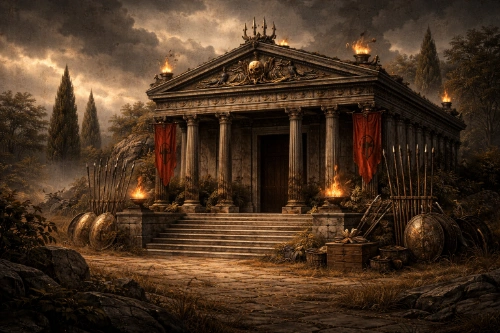
Cabin 5 reflects confrontation, courage, and pressure-driven combat identity in the Camp Half-Blood system.
Family
Notable Children and Related Figures
The main Ares-line anchor in Percy Jackson. Clarisse embodies aggression, courage, pride, combat skill, and the intense competitive energy of Cabin 5.
An Ares camper who helps reinforce Cabin 5's image as battle-ready, forceful, and highly physical in camp culture.
Figures associated with fear and terror in battle, reinforcing Ares's connection to war's emotional and psychological force.
Though not simply reducible to Ares, they are often linked to warlike identity and help expand the wider mythic field around combat and martial power.
Mythology
The relationship between Ares and Aphrodite is one of his most famous mythic connections and reflects the dangerous overlap between desire and conflict.
Ares appears in war narratives as a force of violent involvement, reinforcing his identity as battle made active.
Stories in which Ares is overpowered or trapped add complexity to his image and show that raw force does not always equal invincibility.
The myth of Cadmus and Ares's dragon ties Ares to bloodshed, founding violence, and the cost of conflict.
Many myths and traditions define Ares more clearly through comparison with Athena, showing war as force versus war as strategy.
Personality Match
Ares-identified readers usually connect with boldness, intensity, courage, direct action, and the willingness to enter conflict instead of avoiding it. This profile often appeals to people who feel strongest when pressure is high and the stakes are visible.
Compared with more strategic or emotionally restrained godly-parent identities, Ares feels hotter, faster, and more openly confrontational. His energy is often tied to competitiveness, pride, physical expression, and the urge to push back immediately.
This profile frequently appeals to readers who want power to feel forceful, undeniable, physical, and battle-tested.
Ares vs Apollo: Ares is more confrontational, physical, and aggression-driven, while Apollo feels brighter, more expressive, and more skill-diverse.
Ares vs Poseidon: Ares acts hot and immediate, while Poseidon feels deeper, steadier, and more elemental in his force.
Ares vs Hades: Ares is overt, explosive, and high-conflict, while Hades is quieter, more controlled, and inwardly intense.
Appearances
Ares is central to the book's escalation of danger and is one of the clearest examples of divine aggression entering Percy's world directly.
Ares's influence continues strongly through Clarisse and the identity of Cabin 5, even when he is not the central god on the page.
The broader war tension of the series keeps Ares relevant as part of the Olympian power structure around conflict and combat.
As pressure rises across Camp Half-Blood, Ares-line identity remains important through combat readiness and cabin culture.
War reaches Olympus itself, making Ares's domain especially relevant as battle becomes the central reality of the story world.
Why Ares Matters
Ares matters in Greek mythology because he represents a side of power that cannot be cleaned up or idealized: war as violence, aggression, fear, and force. He embodies the raw human and divine reality of conflict when it becomes physical and personal.
In Percy Jackson, Ares matters as a godly-parent archetype, Cabin 5 identity anchor, and a direct bridge between mythic war and reader self-identification through strength, courage, and confrontation. He turns battle into a vivid personal identity within Camp Half-Blood.
Discover your godly parent
If you connect with courage, aggression, competition, combat instinct, and the need to meet pressure head-on, Ares may be one of your strongest Camp Half-Blood matches.
Ares Cabin 5 Guide
Explore Cabin 5 traits, combat energy, Clarisse's legacy, and what it means to belong to Ares at Camp Half-Blood.
Read Guide
Clarisse La Rue Profile
See why Clarisse is the clearest Ares-line anchor and how she defines Cabin 5 for Percy Jackson readers.
Read Guide
Percy Jackson Cabin Quiz
Find out whether Ares is your strongest godly-parent match at Camp Half-Blood.
Read Guide
12 Olympian Gods Guide
Compare Ares with Athena, Zeus, Poseidon, and the rest of the Olympian gods in one overview.
Read Guide


